
Introduction
How much does a Halong Bay trip cost? For most travelers navigating the post-inflation landscape of 2026, a realistic total budget stretches from US$60 to over US$600 per person.
However, a raw number doesn’t tell the full story. A budget day trip from Hanoi can be surprisingly affordable, while a luxury overnight cruise with premium services can cost several hundred dollars. The secret to planning the perfect itinerary without overspending lies in understanding exactly where your money goes.
If you are wondering how much money you should budget for Halong Bay, this guide breaks down every major expense in a practical way. Instead of looking only at cruise prices, we will pull back the curtain on regional route variations, actual port fees, Hanoi transit pricing, and the hidden costs that many first-time visitors overlook.
By the end, you will have a rock-solid estimate of your Halong Bay trip cost, whether you are traveling solo, as a couple, or with family.
How Much Does a Halong Bay Trip Actually Cost?
Want an overview picture? Review the budget samples below before going into more details:
| Travel Style | Typical Budget (Per Person) | Target Experience |
| Budget Day Trip | US$60 to US$120 | Shared shuttle, Route 2 standard day-boat, basic lunch |
| Mid-Range Overnight | US$145 to US$250 | 4-star boutique vessel, classic itineraries, all meals on board |
| Premium 2-Day Cruise | US$250 to US$450 | 5-star steel-hull cruise, balcony suite, active excursions |
| Ultra-Luxury Experience | US$450 to US$980+ | Presidential suite, private transfers, off-the-beaten-track route |
However, your final bill depends heavily on how you navigate the region’s unique geography, seasonal shifts, and non-obvious cruise exclusions.
To help you build an accurate, surprise-free travel fund, we are going to dive deep into the specific variables that dictate these numbers, from choosing your route across the sub-bays to calculating your exact transportation, food, and hidden onboard expenses.
First Step: Choose Your Halong Routes
When travelers ask, “Is Halong Bay expensive?”, they often treat the region as a single destination. In reality, the Gulf of Tonkin is split into three distinct geographic zones, each governed by different management boards and port locations.
Where your ship sails fundamentally shifts your Halong Bay travel cost.
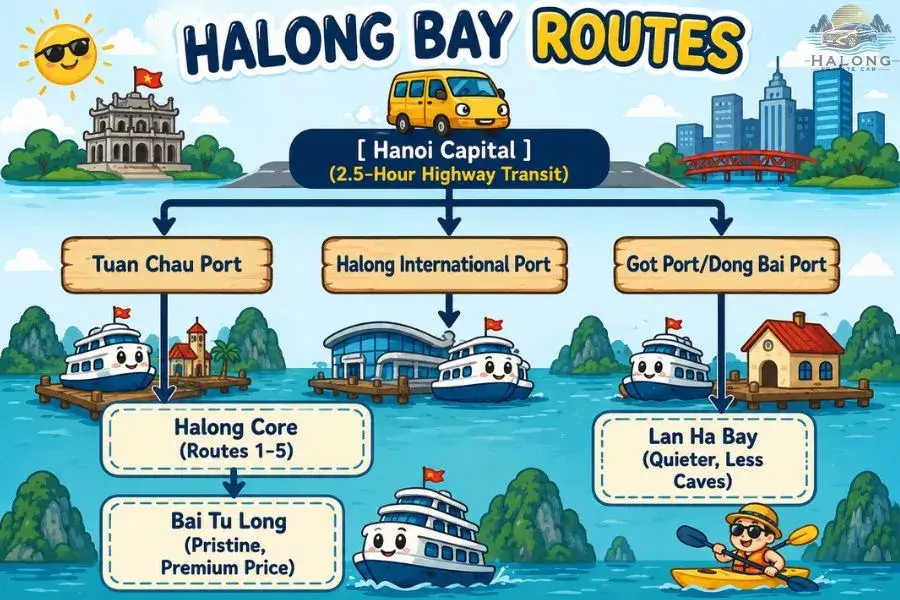
#1 Core Halong Bay (Routes 1 & 2): Departing predominantly from Tuan Chau Marina or the Halong International Cruise Port (Sun Port) in Bai Chay. This is the classic postcard route featuring Sung Sot (Surprise) Cave and Titop Island. It is highly competitive, keeping Halong Bay budget options plentiful but crowded.
#2 Lan Ha Bay: Located south of the core bay, typically accessed via Cat Ba Island or dynamic tenders from Got Port. Lan Ha features cleaner waters and fewer massive crowds, though mid-range to luxury cruise vessels dominate this space.
#3 Bai Tu Long Bay: The northeastern sub-bay. Pristine, highly regulated, and significantly more exclusive. Because fewer operators are licensed here (such as Grand Pioneers or Dragon Legend), prices trend higher, but it rewards you with untouched landscapes.
To decide better, see our comparisons on Halong Bay vs Bai Tu Long Bay and Halong Bay vs Lan Ha Bay.
Halong Bay Cruise Cost
Your choice of vessel is the anchor of your entire Halong Bay travel budget. So far, pricing tiers have stabilized around specific ship builds, safety standards, and service levels.
Day Cruises (4 to 8 Hours)
Price Range: US$35 to US$90 per person.
What You Get:
- A standard day-boat handles Route 1 (4 hours) or Route 2 (6–8 hours).
- A Halong Bay day cruise price near the lower end typically covers entry fees and a set-menu lunch.
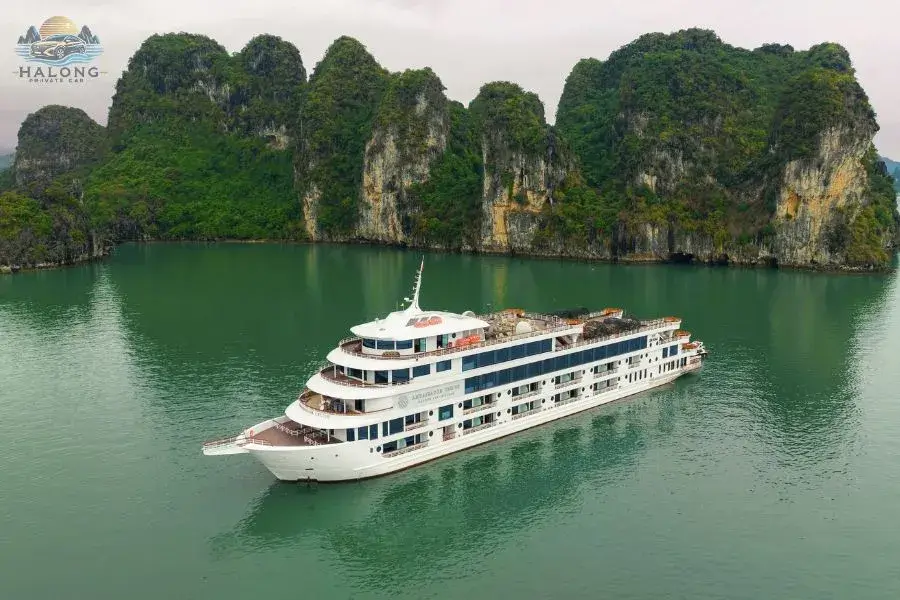
- Upgrading to modern premium day-vessels (like the Ambassador Day Cruise or Iris) gets you an international buffet, live music, and a steel-hull cruise experience without the overnight price tag.
Standard & Mid-Range Overnight Cruises (3-Star to 4-Star)
Price Range: US$110 to US$220 per person (based on double occupancy).
What You Get: Classic vessels like Swan, Phoenix, or Pelican. These cruises provide:
- Cozy, air-conditioned en-suite cabins
- Traditional Vietnamese culinary demonstrations
- Morning Tai Chi sessions
- Guided excursions to spots like Luon Cave or Ti Top Island

Luxury & Ultra-Luxury Cruises (5-Star+)
Price Range: US$250 to US$600+ per person.
What You Get:
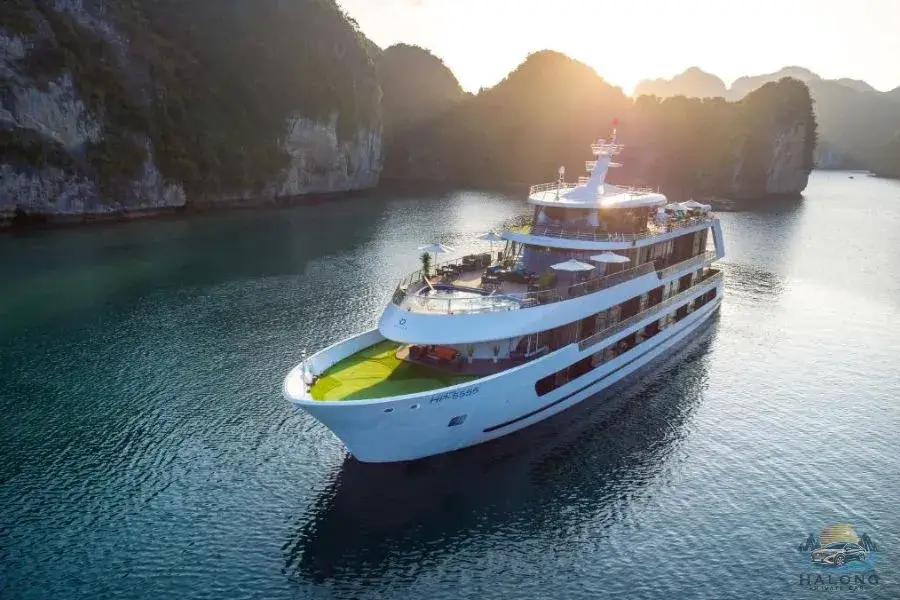
- Elite steel-hull marvels like Stellar of the Seas, Catherine, Capella, or Heritage Binh Chuan.
- Expect private walk-out balconies, standalone bathtubs, fine-dining menus, infinity pools, mini-golf courses, and wine cellars.
Expert Insight: When assessing your Halong Bay cruise cost, always check the fine print. A premium US$260 cruise often includes complimentary kayaking and standard drinks, whereas a US$180 mid-range option might charge extra for those activities, closing the price gap by the time you disembark.
The Hidden Costs of Halong Bay Cruises
The headline rate you book online is rarely the final balance sheet of your trip. To ensure your Halong Bay travel budget doesn’t balloon unexpectedly, account for some hidden costs to expect.
Critical Cruise Invoice Exclusions:
The Beverage Trap: Beverage packages are rarely included on overnight itineraries. Onboard filters provide basic drinking water, but soft drinks average US$2 to US$3, domestic beers like Bia Ha Noi sit around US$3 to US$4, and international wine bottles fetch US$30 to US$70.
The Single Supplement Fee: Almost all retail cruise rates are calculated based on double occupancy (two passengers sharing a room). If you are mapping out a Halong Bay travel budget for solo travelers, expect to pay a 30% to 50% single supplement surcharge to claim an entire cabin alone.
Mandatory Holiday Galas: If your stay lands on Christmas Eve, New Year’s Eve, or Vietnam’s Lunar New Year (Tet), operators frequently assess a mandatory gala dinner fee ranging from US$40 to US$90 per person, regardless of your dietary preferences.
Mainland Crew Tips: Gratuities are not legally mandatory in Vietnam, but they are culturally expected on mid-to-luxury lines. Budgeting US$5 to US$10 per day for the general ship crew box ensures fair distribution among deckhands, kitchen staff, and cabin stewards.
Hanoi to Halong Bay Transportation Cost
After routes and cruise, transportation costs are the next factor to consider when deciding how much your Halong Bay trip will cost.
Getting from the capital down to the coast takes about 2.5 hours via the modern Hanoi-Hai Phong Expressway. Unless you are booking an all-inclusive package, transit is treated as an independent line item in your Halong Bay expenses.
Transportation options from Hanoi (Expressway) to Tuan Chau/Bai Chay Ports:
#1 Shared Shuttle Bus: US$10 to US$20 per person, one way. These are standard tourist buses picking up across the Old Quarter.
#2 Luxury Limousine Van: US$20 to US$40 per person, one way. This option uses customized 9-seater Ford Transits or Solatis featuring plush leather captain’s chairs, USB ports, and a more direct pickup loop.
#3 Private Car Transfer: US$80 and US$130 per vehicle, round trip for a standard sedan or SUV. If you are traveling as a family or small group, splitting a private vehicle provides flexible departure times, direct door-to-door transit, and competitive per-person costs.
Check out our services: Hanoi To Halong Bay Private Car and Halong Bay To Hanoi Luxury Car.

On-Land Accommodation Cost
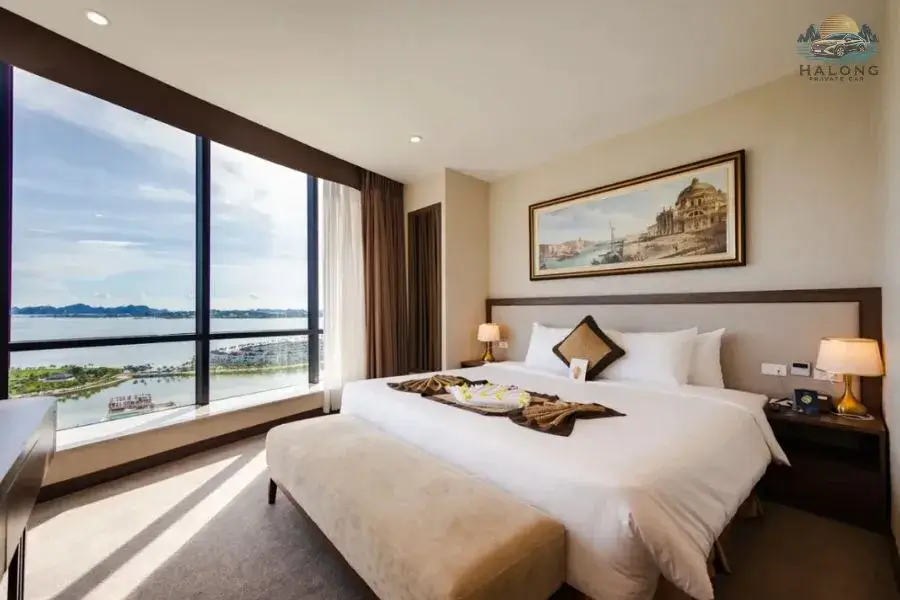
If you are catching an early morning sailing or descending from a late-afternoon disembarkation, booking an extra night on land in Halong City is a common tactical move. The city is broadly divided into two major sections separated by the Bai Chay Bridge: Bai Chay (the tourist center and port side) and Hon Gai (the local administrative and authentic food side).
Your Halong Bay accommodation cost will shift radically based on these zones:
#1 Bai Chay Zone (Touristic, Close to Ports)
- Hostels/Guesthouses: $10-$25
- Mid-Range Hotels: $45-$90
- 5-Star Resorts: $120+
#2 Hon Gai Zone (Local Vibe, Seafood)
- Boutique Homestays: $15-$30
- Business Hotels: $35-$70
- Local Seafood Hubs
For travelers tracking down where to stay in Halong Bay budget options, the mini-hotels tucked away behind the Sun World complex in Bai Chay yield clean, air-conditioned en-suite rooms for US$20 to US$35 a night.
If you are looking for premium resort properties before boarding a luxury liner, properties like Vinpearl Resort & Spa on Reu Island or the Muong Thanh Luxury hotel trend upward of US$110 to US$160 per night during the summer high season.
On-Land Dining and Seafood Prices
While your cruise package covers all meals while onboard the ship, dining independently on the mainland allows you to explore authentic regional specialties.
Mainland Dining Cost Breakdown (Per Person)
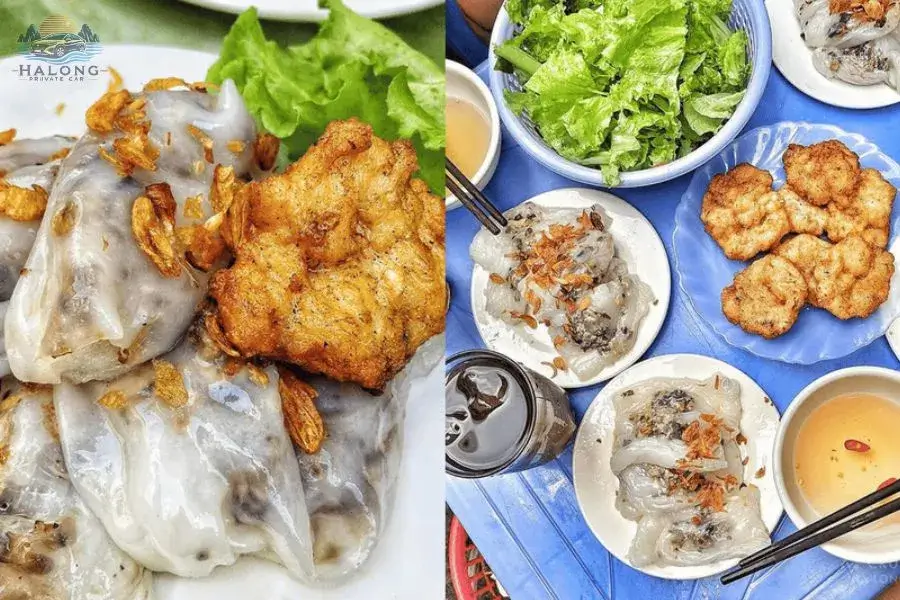
- Street Food (Bánh cuốn chả mực): VND 45,000 – 75,000 ($2 – $3)
- Standard Vietnamese Com Binh Dan: VND 50,000 – 90,000 ($2 – $4)
- Mid-Range Tourist Restaurant: VND 150,000 – 300,000 ($6 – $12)
- Premium Live Seafood Dinner: VND 400,000 – 900,000+ ($16 – $36+)
Food prices in Halong Bay are notoriously susceptible to tourist markups along the main Bai Chay coastal strip. To sample authentic seafood prices in Halong Bay without paying a premium, cross over the bridge into Hon Gai.
A plate of Halong’s signature bánh cuốn chả mực (steamed rice rolls paired with hand-hammered squid patties) costs roughly VND 50,000 (US$2.00) at local stalls.
Whereas a full live seafood dinner featuring blue crab, razor clams, and mantis shrimp at an established restaurant in Halong City hub like Nha Hang Hong Hanh will run VND 450,000 to VND 850,000 (US$18 to US$35) per person depending on the weight of your selection.
Entrance Fees & Independent Activity Costs
One of the chief complaints of independent or DIY travelers is the multi-layered fee structure implemented by the local port authorities.
If you are booking a reputable mid-range or luxury cruise, these fees are wrapped into your total booking price. If you are coordinating a DIY Halong Bay trip cost outline, you must budget for these separate tickets at the terminal.
The official Halong entrance fees managed by the Quang Ninh Management Board are based strictly on specific sightseeing routes:
Route 1 (4 Hours – Historic Caves):
- VND 290,000 to 310,000 (approx. US$12) per person.
- It covers Thien Cung (Heavenly Palace) Cave and Ba Hang.
Route 2 (6 Hours – Classic Icon Route):
- VND 290,000 (approx. US$12) for day access.
- If you are staying overnight, the fee rises to VND 590,000 (approx. US$24) for a 2-day/1-night permit, or VND 790,000 (approx. US$33) for a 3-day/2-night layout.
- This bundle grants access to your Sung Sot Cave ticket, Luon Cave, and your Titop Island entrance fee for panoramic views.
Kayaking and Bamboo Boat Rides:
While access to the aquatic zones is part of your main transit permit, physically renting a vessel at the local cooperative stations (like the one near Luon Cave) demands an independent kayaking price Halong Bay fee of VND 60,000 to 100,000 (approx. US$2.50 to US$4) per person.
Insider Money-Saving Strategies
As locals who watch thousands of travelers navigate these ports every month, we recommend using these specific money saving tips to slice your total expenses without diminishing your overall experience:
#1 Leverage the Shoulder-Season Pivot:
The Western high season runs from October through April, while domestic summer crowds spike from late May to August. Booking your trip during the transitional shoulder months of May or September opens up promotional discounts of up to 20% to 35% on 5-star vessels trying to fill vacant cabins.
#2 The Lan Ha Bay Alternative:
If you want a luxury steel-hull cruise experience but find the core Halong routes cost-prohibitive, look into boutique operators sailing through Lan Ha Bay out of Got Port or Tuan Chau. Because Lan Ha avoids the high-tariff core zone managed by the main Quang Ninh board, operators can pass structural savings down to consumers, saving you US$30 to US$60 per cabin for an equivalent tier of luxury.
#3 Bring Your Own Hard Alcohol:
If you plan on enjoying premium spirits or specific wines while watching the sunset, purchase them at a convenience market in Hanoi’s Old Quarter prior to departure. Most luxury cruises assess a corkage fee of US$15 to US$25 per bottle, which is still significantly cheaper than buying premium spirits by the glass at the onboard sky lounge.
FAQs
How much cash should I bring to Halong Bay if my cruise is prepaid?
If your transfers and cruise package are settled, we recommend carrying roughly VND 1,500,000 to 2,500,000 (approx. US$60 to US$100) in cash per person for a 2-day trip. This comfortably protects you against onboard beverage bills, unexpected kayaking rentals, tip boxes, and spontaneous street food runs on land where international credit cards are not processed.
Is a day trip to Halong Bay worth it or is it too rushed?
A day trip is highly efficient if your total itinerary in Vietnam is tight. However, note that a standard day tour means spending 5 hours in transit round-trip from Hanoi for just 4 to 6 hours on the water. If you want a more relaxed pace and wish to experience the bay at sunrise and sunset when the day-boats have cleared out, booking at least a 2-day/1-night cruise is well worth the extra money.
Are there any new safety or environmental fees active for this year?
Yes. Following updated maritime safety and environmental protection codes implemented by the Quang Ninh province, all vessels are now assessed stricter waste management and automated tracking (AIS) fees. These are systematically rolled directly into your retail ticket cost at checkout; if an unregulated independent operator tries to tack on an “unforeseen environmental fee” at the gangway, it is a localized tourist trap.
Final Thoughts
So, how much does a Halong Bay trip cost? It costs exactly as much as you need to match your personal definition of adventure. Whether you choose to explore the limestone karsts via a classic, budget-friendly day-boat or lounge across the private teak terrace of an ultra-luxury suite, this UNESCO World Heritage site remains one of the most visually stunning corners of Southeast Asia.
By mapping your budget to the real, current pricing tiers outlined in this guide, you can eliminate unexpected financial stress and focus entirely on the jaw-dropping vistas ahead.
Halong Private Car team wants to send a sincere thank-you for reading our complete breakdown and trusting our local insights to guide your journey through Vietnam. May your time on our northern waters be filled with glassy bays, clear skies, and unforgettable memories.
Have a wonderful and complete journey to Halong Bay!