Introduction
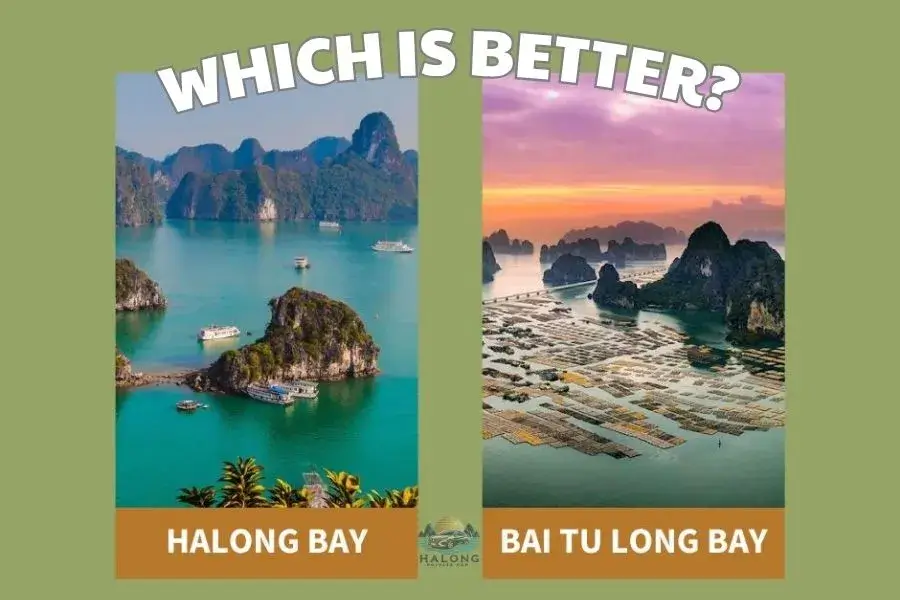
Planning a cruise in northeast Vietnam often brings travelers to a major crossroads: the choice of Halong Bay vs Bai Tu Long Bay. Both of these coastal destinations are part of the exact same geological system, featuring thousands of dramatic limestone karsts rising sharply from calm emerald waters.
However, the operational reality of exploring them differs completely. Your decision will dictate everything from the number of vessels sharing your sunset view to the specific caves you explore. We break down the practical differences so you can select the paradise that aligns with your specific vacation goals.
Quick Decision: Halong Bay or Bai Tu Long Bay?
Before we dive into the specific routes, this quick-comparison matrix outlines exactly what you gain or sacrifice with each choice.
| Feature | Halong Bay | Bai Tu Long Bay |
| Primary Atmosphere | High energy, bustling, highly social | Serene, isolated, slow paced |
| Vessel Density | High concentration of overnight boats | Intimate, strictly limited licenses |
| Major Sights | Sung Sot Cave, Titop Island, Luon Cave | Thien Canh Son Cave, Vung Vieng Village |
| Main Departure Ports | Tuan Chau, Halong International Port | Hon Gai, Ha Long International Port |
| Ideal For | First time visitors, budget travelers, families | Honeymooners, nature enthusiasts, repeat guests |
Still deciding between the major bays? Also see our Halong Bay vs Lan Ha Bay comparison.
Of course, a simple chart cannot capture the full magic of the gulf. To help you map out your actual days on the water, let’s unpack the reality of the geography, scenery, and logistics that truly separate these two worlds.
The Reality Check: Atmosphere and Crowds
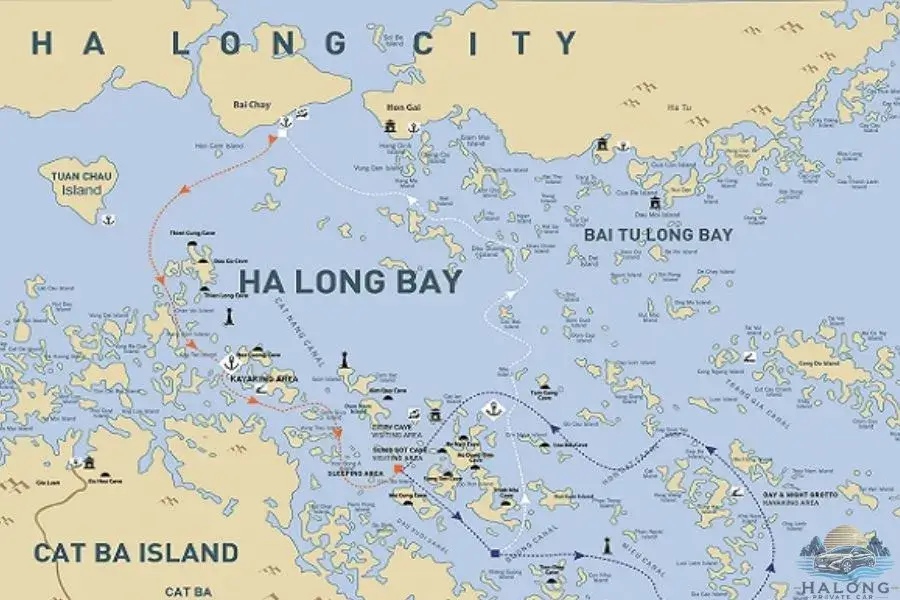
While these neighboring bays share the exact same jagged limestone topography along the Quang Ninh coast, local maritime boundaries divide them into two entirely different worlds.
Halong Bay is a highly developed, high-volume gateway for major tourist crowds, while Bai Tu Long Bay is a strictly protected, low-impact marine sanctuary. Stepping onto a boat in one feels nothing like the other.
Halong Bay: The Iconic and High-Energy Theater
Modern Halong Bay operates as a grand theater of international tourism. The incredible concentration of towering karsts provides the definitive postcard image of Vietnam, drawing hundreds of vessels onto the water daily.
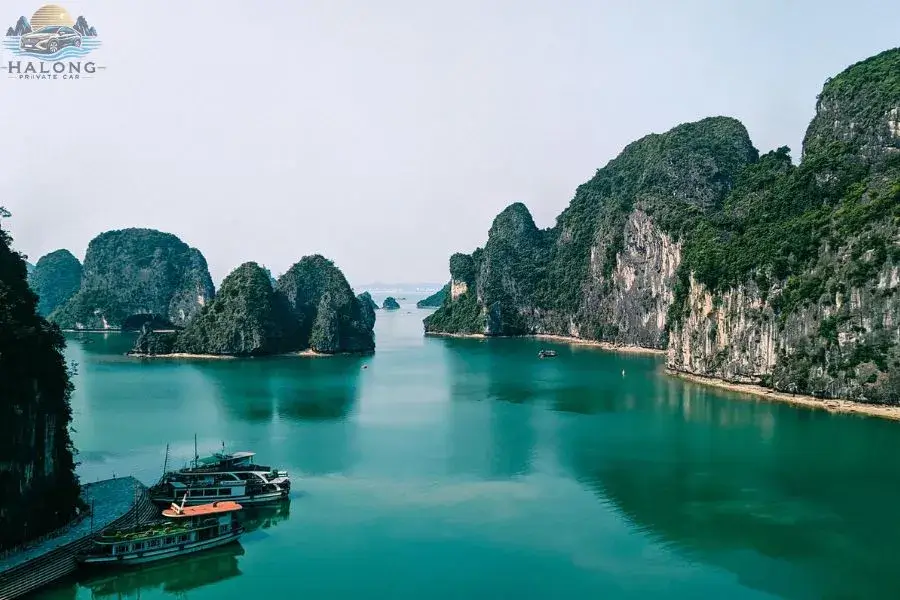
Departing from massive modern hubs like the Tuan Chau Marina, you will immediately feel the vibrant energy of a world-class destination. The evenings are lively, with boats anchoring in designated clusters that create a glittering floating community after dark.
While the high density of vessels means sharing the horizon with other travelers, the unparalleled scale of the surrounding scenery reminds you exactly why this UNESCO World Heritage site became famous in the first place.
Bai Tu Long Bay: The Quiet and Pristine Frontier
To the northeast lies an entirely different rhythm of coastal life. Stricter national park boundaries and highly regulated tourist licensing keep the waters of Bai Tu Long wonderfully uncrowded.
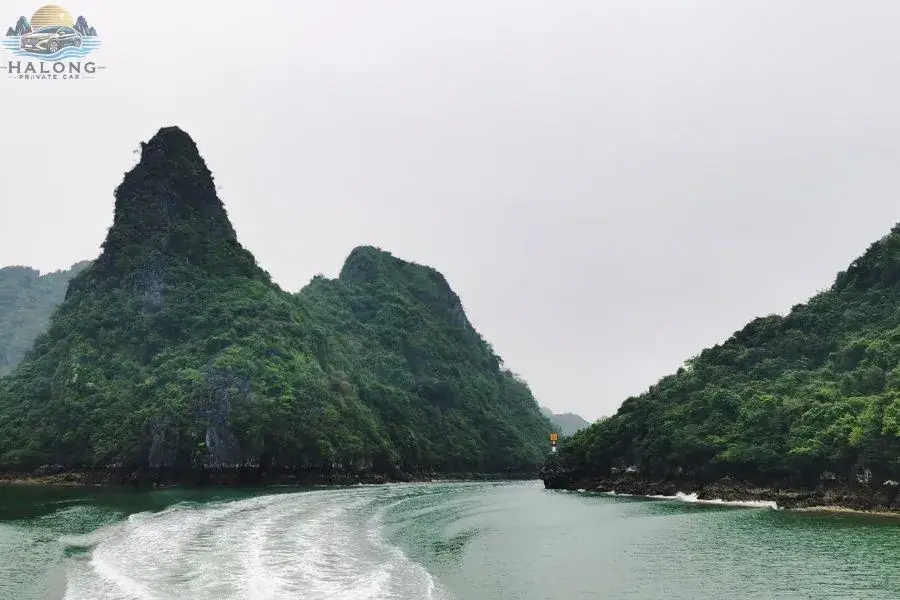
The natural environment benefits directly from this lighter footprint. The waters appear exceptionally clear, the horizons remain open, and the absolute silence of the landscape is preserved. Sailing through this sector offers a rare glimpse into the past, showing visitors what the entire region felt like before global tourism arrived.
It provides a peaceful sanctuary where the grandeur of the limestone karsts can be appreciated without the constant hum of neighboring boat engines.
Is Halong Bay Worth Visiting in 2026? Find out in our complete atmospheric review.
Scenery and Sightseeing: Are the Views Equal?
Visually, the bays are identical twins. Both feature the same breathtaking, forested karsts jutting straight out of the Gulf of Tonkin.
The real variance is on the ground: Halong Bay features wide, concrete walkways engineered to handle thousands of daily cave visitors, whereas Bai Tu Long keeps its pathways rugged, raw, and blissfully uncrowded.
Halong Bay Sights: Grand Scale and Famous Formations
The classic routes of Halong Bay host the most celebrated and physically massive attractions in the gulf. Sung Sot Cave features colossal underground chambers lit by artistic installations, accessed via wide, well-paved stone steps.
Nearby, Titop Island provides a rare sandy crescent beach paired with a steep hiking trail leading to a panoramic 360-degree viewing platform. These locations offer unmatched physical scale and dramatic vantage points for photography.
The tradeoff is strict synchronization, as your cruise group will move alongside many other travelers visiting the exact same highlights at the same hours.

Bai Tu Long Sights: Secluded Coves and Untamed Nature
The alternative routes focus on raw authenticity and undisturbed exploration. In this region, Thien Canh Son Cave offers a more rugged, wild pathway. To explore it, you’ll climb a hidden path of 100 stone steps beneath a dense forest canopy rather than walking through a brightly lit tourist tunnel.
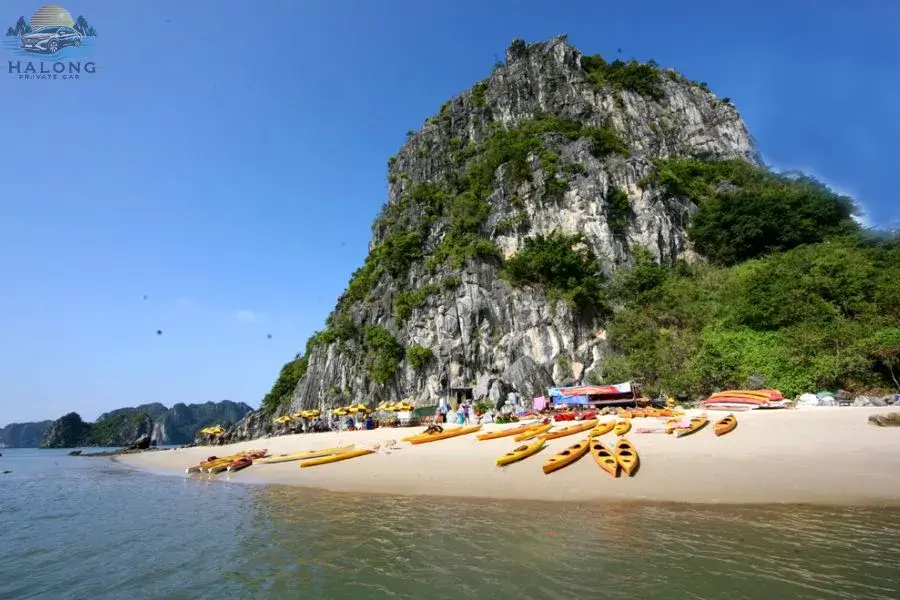
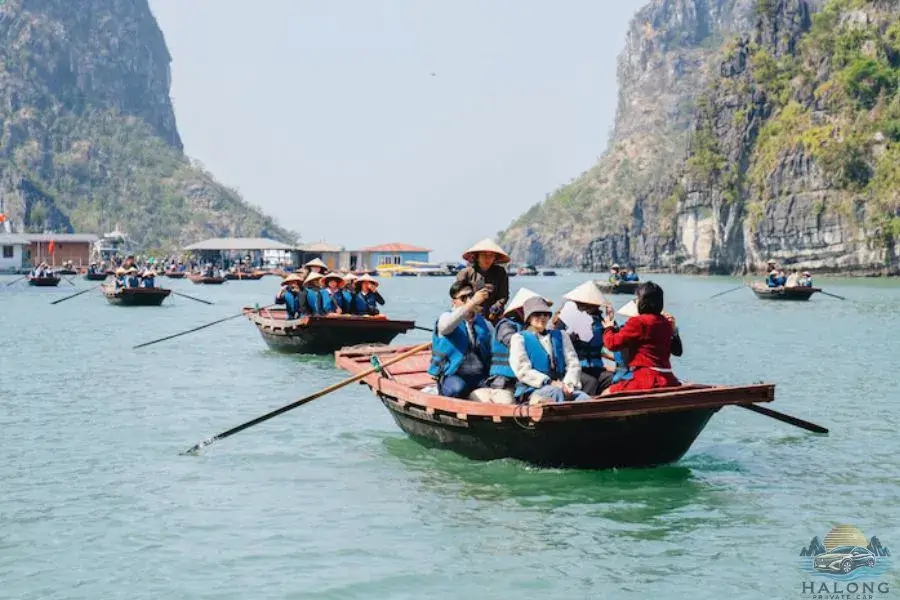
Cultural exploration thrives here at the Vung Vieng floating village, where local residents guide visitors through traditional aquaculture farms using small bamboo rowing boats. Because there are no massive crowds blocking the view, kayakers can explore quiet mangrove forests, discover secret sandy pockets, and take photographs completely free of tourist traffic.
Travel Times and Cruise Routes Compared
Getting from the capital to the water utilizes the modern Hanoi–Hai Phong Expressway (QL5B), eliminating the long transit delays of the past. However, the mileage, travel windows, and operational environments shift based on your selected departure hub.
Overall:
- Total driving distance averages 150 to 164 kilometers (93 to 102 miles).
- Traveling via luxury limousine shuttle bus costs $20 to $25 per person each way (2 to 2.5 hours, assuming normal traffic).
- A private car transfer runs between $95 and $190 total per vehicle. Check out Hanoi to Halong Bay Private Car for the best price.
The Halong Hubs:
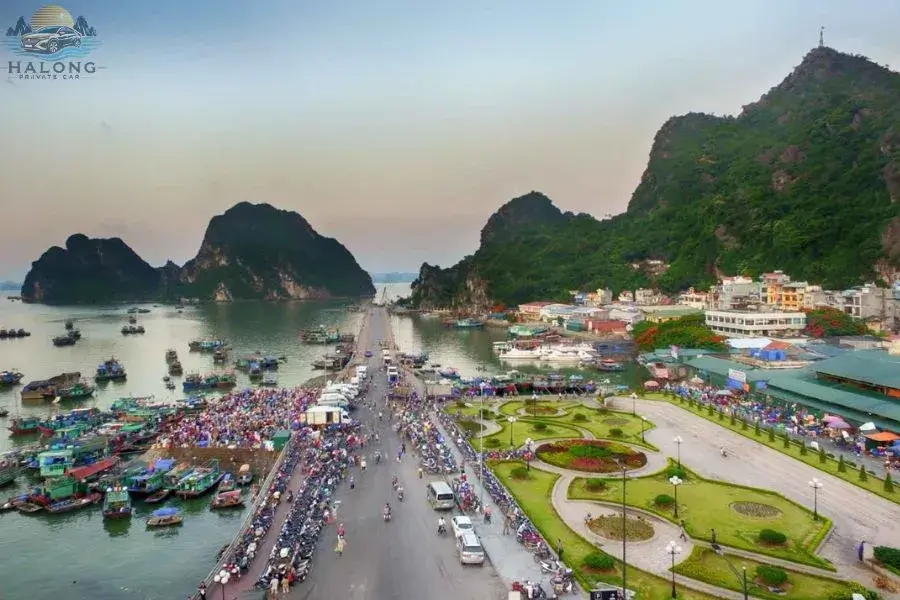
Halong Bay operations center heavily around Tuan Chau Marina (150 km from Hanoi) and the high-tech Halong International Cruise Port (155 km from Hanoi). These terminals handle hundreds of day boats and luxury steel vessels concurrently with high efficiency.
The Bai Tu Long Pier:
Setting a course for the quiet northeast often routes you through Hon Gai Port or specific dedicated boutique docks. Because Bai Tu Long Bay’s primary island fields sit further out, vessels chart longer initial sailing legs. This means your first 2 to 3 hours on board consist of open-water cruising away from the coast, offering extended quiet time before any major sightseeing stops.
Booking Options and Value for Money
The financial structure reveals a direct trade-off between open-market variety and tightly regulated, premium seclusion. This pricing divergence is driven heavily by official park entry fees and the sheer volume of operating permits allowed by local authorities.
| Expense Category | Halong Bay Pricing (updated) | Bai Tu Long Bay Pricing (updated) |
| Official Park Entry Fees | 310,000 VND (~$13 USD) for 4–6 hour day routes; 540,000 VND (~$22 USD) for overnight stays. | Controlled under Route 4 pricing: 260,000 VND (~$11 USD) for day access; 540,000 VND (~$22 USD) overnight. |
| Standard Day Cruises | $40 to $65 per person (includes shared transport, lunch, and a 4–6 hour route). | $58 to $99 per person (limited boutique operators; longer day-sailing windows). |
| Mid-Range Overnight Cruises (2D1N) | $135 to $155 per person (Based on standard 3 to 4-star steel vessels). | $125 to $145 per person (Typically traditional, smaller wooden junk boats like Swan or Renea). |
| Luxury Overnight Cruises (2D1N) | $160 to $345+ per person (5-star luxury floating hotels, private balconies). | $180 to $300+ per person (Boutique luxury operations like Dragon Legend or Signature). |
| Extended 3D2N Packages (5-Star) | $300 to $620 per person (Includes deep-bay excursions, kayaking, all meals). | $226 to $372+ per person (Fewer options; heavily dependent on seasonal promotions). |
Market competition works heavily in favor of budget-conscious travelers choosing Halong Bay, where massive operators easily absorb logistics costs.
Conversely, a cruise into Bai Tu Long Bay filters out the ultra-budget crowds. Because the government restricts commercial boat licenses to preserve the national park ecosystem, you will pay a higher structural cost for mid-range and premium boutique operations. However, this investment translates directly into fewer vessels sharing your overnight anchorage points on the water.
The Matchmaker: Which Bay Matches Your Travel Style?
Choosing between Halong Bay vs Bai Tu Long Bay comes down to identifying your personal travel priorities rather than declaring one bay universally superior to its neighbor. By analyzing your budget, social preferences, and desired pace, the correct choice becomes obvious.
Choose Halong Bay If…
- You are visiting Vietnam for the first time and want to cross the absolute most famous landmarks off your travel bucket list.
- You are operating on a strict budget and want to take advantage of intense market competition to secure a low cost cruise package.
- You enjoy a highly social, festive onboard atmosphere where you can easily meet and mingle with international travelers.
- You are traveling with young children or elderly family members who require the convenience of short transfer times and highly structured sightseeing paths.

Choose Bai Tu Long Bay If…
- You are a repeat visitor to northern Vietnam, looking to discover a completely different, unhurried side of the Gulf of Tonkin.
- You are celebrating a wedding, honeymoon, or anniversary and place the highest priority on romantic isolation and deep privacy.
- You are a dedicated landscape photographer or birdwatcher who requires empty horizons, clear waters, and undisturbed natural wildlife habitats.
- You are an advocate of sustainable tourism who prefers supporting lower-impact, highly regulated travel models that actively protect the local marine ecosystem.
Final Thoughts
Halong Bay vs Bai Tu Long Bay is a simple choice between icon status and raw isolation. No matter which sister bay wins your heart, planning ahead ensures you match with the right route, vessel, and travel window.
Still weighing all your geographical options? Read our comprehensive showdown of Halong Bay vs Lan Ha Bay vs Bai Tu Long Bay. Moreover, if you’re ready to lock in your travel dates, check out our seasonal breakdown at Best time to visit Halong Bay.
Finally, the entire Halong Private Car team wishes you an unforgettable journey through our beautiful coastal home. We hope these local insights help you curate the exact cruise experience you are dreaming of. Thank you so much for reading our guide!